Applied Software Logic
Software engineering principles have solved complexity at scale. We apply these same principles to operational automation, bringing decades of best practices to your business processes.
// The insight that drives everything we build
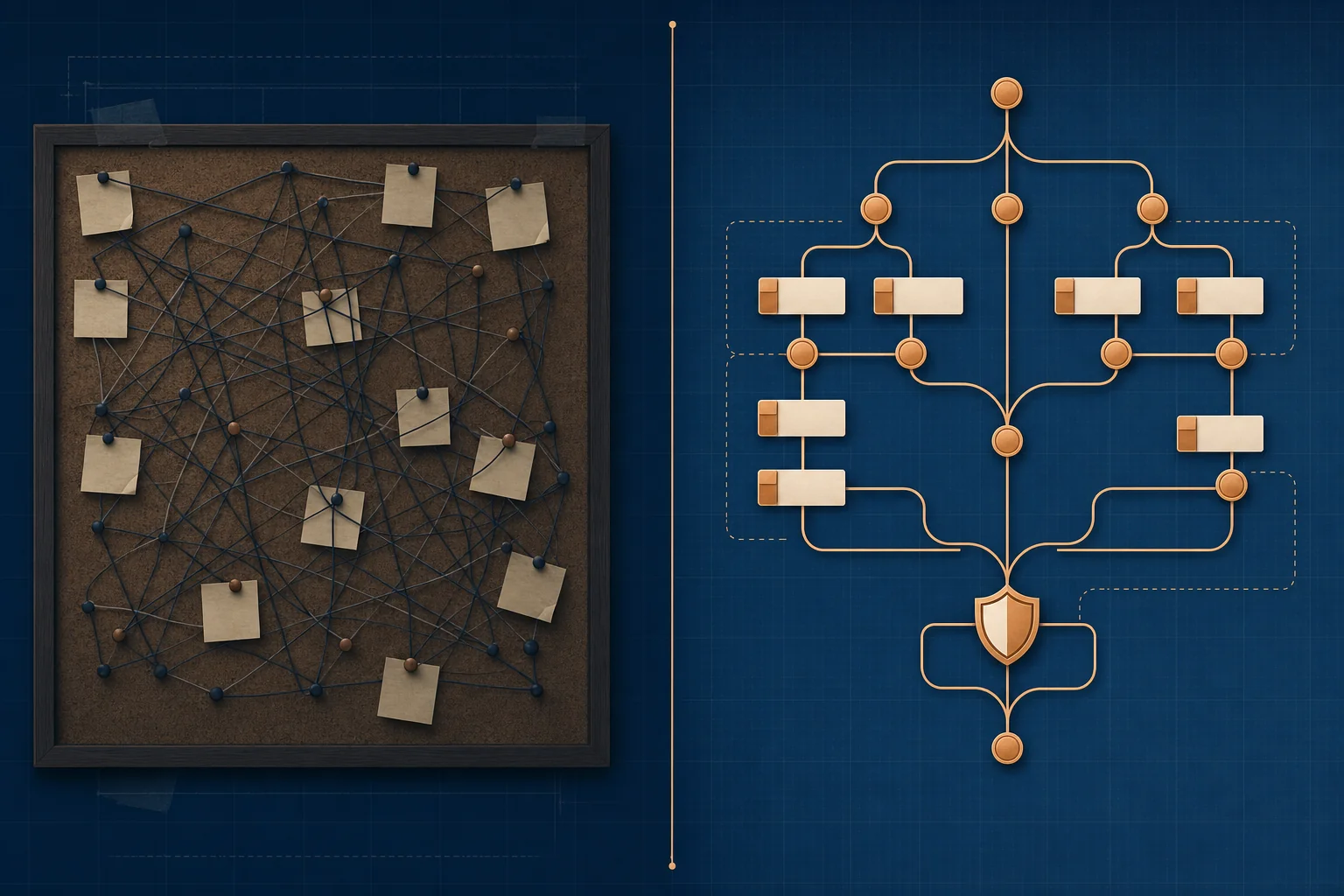
Operations are just code that humans execute manually.
We make that code explicit, executable, and continuously improving.

Proven Patterns Applied to Operations
These principles have enabled software to scale from simple scripts to systems handling billions of transactions.
Modularity
Each Business Logic Chain handles exactly one workflow. Clean boundaries, clear ownership, easy to modify.
Version Control
Every change to your operational logic is tracked. Roll back instantly if something doesn't work.
Testing
New workflows run alongside existing processes. Validate they work before going live.
Continuous Deployment
Deploy improvements without downtime. Your operations get better every quarter.
Error Handling
Every exception is caught, logged, and routed to the right person with full context.
Abstraction Layers
Your ERP, WMS, and email systems are abstracted behind clean interfaces. Change systems without rewriting logic.
Traditional vs Software-Driven Operations
Ready to Apply Software Logic to Your Operations?
Let's discuss which workflows would benefit most from this approach.
Schedule a CallAI that is checked, not trusted
Every automated decision runs through our code-deterministic stack: rules, a trained System 1, a disagreement cascade, an LLM, and a person with the final word, with every verdict fed back as a label.